

If you’ve started researching daycares or preschools, you’ve probably come across terms like Montessori, play-based, and traditional learning. It can feel confusing to know which approach truly fits your child. Both Montessori and traditional daycares offer nurturing care and early education—but they do it in very different ways.
Here’s a side-by-side look at how these two approaches differ and what to consider when choosing the right fit for your family.
Understanding the Montessori Approach
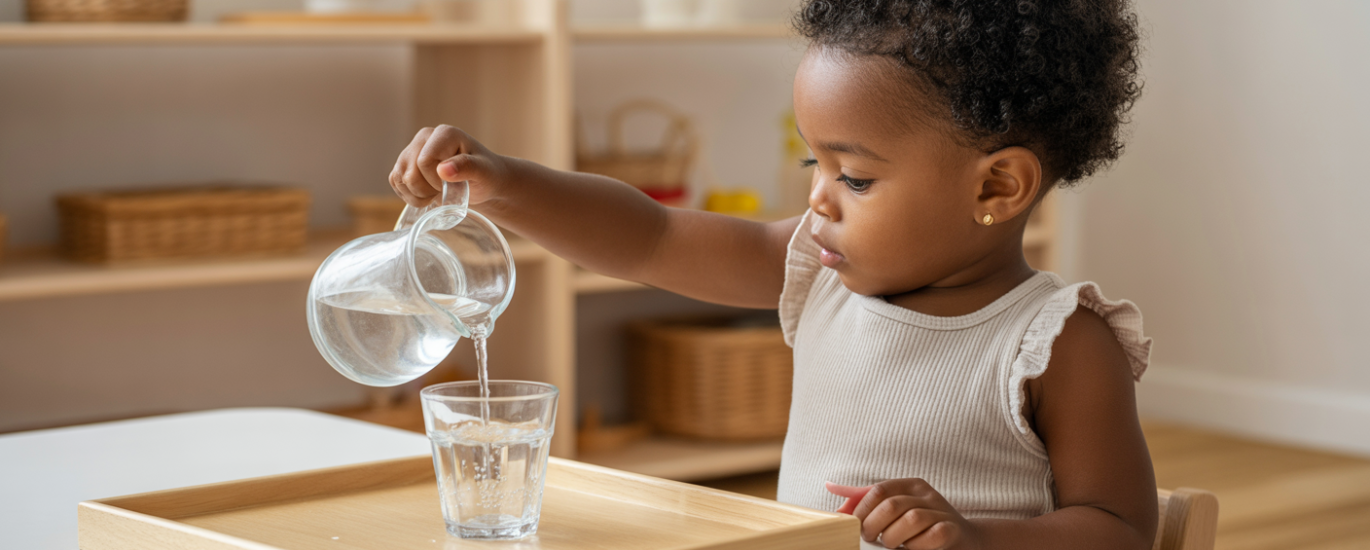
The Montessori philosophy, developed by Dr. Maria Montessori, centers on child-led exploration and independence. Classrooms are calm, organized, and filled with hands-on materials that encourage children to learn through doing—pouring water, sorting objects, or building letters with tactile tools.
Children in Montessori settings often work at their own pace and choose activities that match their interests. The teacher’s role is to observe, guide, and gently introduce new learning opportunities rather than direct the class as a group.
Ideal for: Children who are curious, self-motivated, or thrive with gentle independence.
Understanding the Traditional Approach
Traditional daycare programs typically follow a structured daily schedule with group lessons and teacher-directed activities. Classroom energy is often lively and varied, featuring circle time, songs, story time, and teacher-led crafts.
This approach emphasizes group participation, classroom routines, and readiness for school skills like following directions and cooperating in large groups.
Ideal for: Children who find comfort in clear structure, predictability, and active group learning.
Key Differences Between Montessori and Traditional Daycare
Curriculum & Learning Style
- Montessori: Individualized learning based on the child’s interests; focus on practical life skills, problem-solving, and sensory exploration; lessons often happen one-on-one or in small groups.
- Traditional: Age-based curriculum designed around developmental milestones; emphasis on early academics, group story time, crafts, and songs; children work together on teacher-led lessons.
Teacher Role
- Montessori: The teacher is a guide—observing, supporting, and adjusting the environment to fit each child’s progress.
- Traditional: The teacher is an instructor—leading group lessons, setting the pace, and providing structured direction for all students.
Social Development
- Montessori: Mixed-age classrooms encourage older children to mentor younger ones; social learning happens naturally through collaboration and problem-solving.
- Traditional: Children are grouped by age for consistent peer experiences; structured group play and routines build cooperation and turn-taking skills.
Daily Environment & Schedule
- Montessori: Calm, clutter-free classrooms with low shelves and child-accessible materials; children choose lessons during long, focused work periods; predictable yet flexible rhythm that adapts to the child’s engagement.
- Traditional: Bright, themed classrooms organized by learning zones (blocks, art, pretend play); shorter, more varied activity blocks led by teachers; predictable daily transitions supported by songs and routines.
How to Decide Which Fits Your Child
There’s no single “best” approach—just the one that aligns with your child’s temperament and your family values.
Montessori may fit best if your child:
- Enjoys quiet focus and independent play.
- Tends to get deeply absorbed in tasks.
- Thrives with calm, consistent guidance rather than group direction.
Traditional daycare may fit best if your child:
- Loves group songs, movement, and teamwork.
- Feels motivated by teacher interaction and scheduled activities.
- Benefits from clear structure and frequent transitions.
Some families even find their ideal fit is a blend of both approaches—structure with room for independence, or independence guided by gentle routines.
Questions to Ask During Your Tour
- How much freedom do children have to choose their work or activities?
- How do teachers balance structure with flexibility?
- What does a typical morning or transition look like?
- How do they support social-emotional learning and peer interaction?
- How is communication with parents handled daily?
Pro Tip: Watch how teachers speak to children—tone, patience, and engagement often tell you more than the tour script itself.
Resources for Parents Considering Both Approaches
If you’re unsure which model aligns best with your child’s personality, observe how your child responds to flexible vs. structured play at home.
For parents who want to take the guesswork out:
- Download our HHLC Learning Style Workbook to identify your child’s natural learning rhythm.
- Schedule a tour to see how both Montessori-inspired and structured play blend seamlessly in action.
- Explore our Learning Games collection for home-friendly activities that reinforce both independence and creativity.
Experience both sides, then decide what feels truly right for your child.
FAQs About Montessori vs. Traditional Daycare
Can children switch between Montessori and traditional programs?
Yes. Children are highly adaptable. Smooth transitions usually depend on supportive guidance from both teachers and parents.
Is one better academically?
Both prepare children for kindergarten, though outcomes vary by program quality, not just philosophy. Montessori prioritizes self-paced mastery; traditional programs emphasize early group learning.
Which approach works best for shy or highly active children?
Shy children often thrive in Montessori’s calm, low-pressure setting. Highly active children may prefer traditional classrooms’ energy and frequent transitions.
Do both prepare children for kindergarten equally well?
Yes. When well-run, both approaches support readiness in social, emotional, and cognitive development.
