

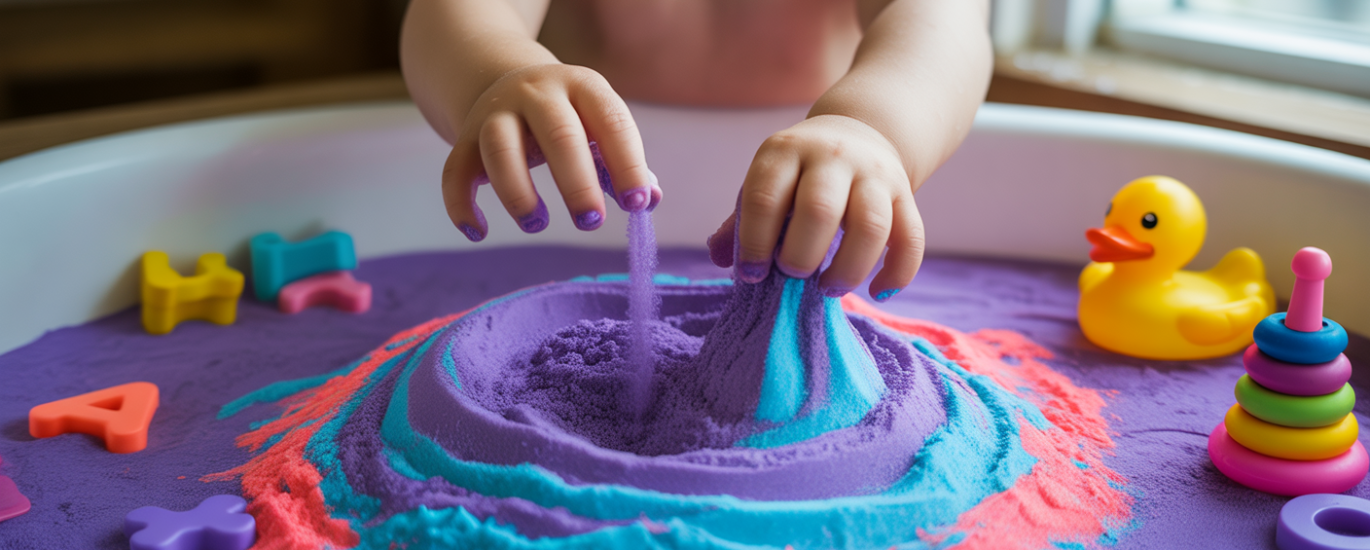
When it comes to helping your toddler grow and learn, sensory play is one of the best things you can do: no screens, fancy toys, or big cleanups required. In just a few minutes a day, these simple activities can strengthen your child’s brain, body, and confidence through hands-on exploration.
Why Sensory Play Is So Important for Toddlers
Every time your toddler touches, smells, hears, tastes, or moves, their brain builds new connections. These connections, called neural pathways, help with everything from problem-solving to speech. Think of sensory play as exercise for the brain: the more varied the experiences, the stronger those brain “muscles” become.
And the best part? Young children naturally learn this way. When they scoop, pour, squish, or shake, they’re not just having fun, they’re training their brain to understand the world.
How Sensory Games Support Brain Development
Here’s how sensory play helps your toddler thrive:
- Cognitive development: Sorting, stacking, and cause and effect play strengthen memory and early reasoning skills.
- Motor skills: Pouring water or squeezing sponges builds hand strength and coordination.
- Language growth: Talking about textures, sounds, and shapes introduces new vocabulary in context.
- Emotional regulation: Sensory play helps toddlers calm their bodies, focus, and process big feelings.
There’s no “right” way to play: just opportunities to explore, discover, and connect.
5 Simple Sensory Games You Can Try Today
Each of these activities takes less than 10 minutes to set up and uses materials you probably already have at home.
1. Texture Treasure Hunt
What You’ll Need:
A small bag or box, and objects with different textures: soft socks, a wooden spoon, a fluffy ball, etc.
How to Play:
Hide a few items in the bag. Let your child reach in and describe what they feel before pulling it out. “Is it rough or smooth?” “Does it feel soft like your blanket?”
What Your Child Is Learning:
Descriptive language, sensory awareness, and early categorization.
2. Water Pouring Station
What You’ll Need:
Two containers and a small scoop or cup. Optional: add food coloring or floating toys.
How to Play:
Place everything in a sink or outside tub. Show your toddler how to pour from one cup to another. Let them explore different sizes and amounts.
What Your Child Is Learning:
Hand-eye coordination, focus, and cause-and-effect (what happens when water spills or overflows).
3. DIY Sensory Shakers
What You’ll Need:
Empty bottles, rice, beans, or pasta shapes.
How to Play:
Help your child fill bottles with different materials and shake them. Talk about the sounds: “This one’s loud!” “This one sounds soft!”
What Your Child Is Learning:
Auditory discrimination and scientific thinking (noticing differences and patterns).
4. Cloud Dough Fun
What You’ll Need:
2 cups of flour and ¼ cup of oil (baby, coconut, or vegetable).
How to Play:
Mix together until it feels like damp sand. Let your toddler scoop, squish, and mold shapes. You can hide small toys inside for added discovery.
What Your Child Is Learning:
Fine motor control and creativity. Plus, squishing and molding helps release tension.
5. Nature Sensory Walk
What You’ll Need:
Just shoes and curiosity! Head outside to explore leaves, sticks, pebbles, and grass.
How to Play:
Encourage your toddler to notice textures, colors, and sounds “Crunchy leaves!” “Smooth rocks!” “Listen to the birds!”
What Your Child Is Learning:
Mindfulness, observation skills, and connection to nature.
Tips for Safe & Stress-Free Sensory Play
- Keep all materials non toxic and age appropriate.
- Always supervise closely, especially with small objects.
- Use a towel or tray for easier cleanup.
- Don’t worry about the mess, focus on the process, not the product.
Even five minutes of sensory play can make a difference, especially when it happens consistently.
How We Use Sensory Learning in Our Learning Center
At Heavenly Hearts Learning Center, sensory experiences are woven into everyday routines: whether it’s mixing colors, exploring textures, or investigating nature materials. We know that when children learn through play, they build curiosity, confidence, and lifelong learning habits.
Explore more learning games your child will love →
See how we support hands-on learning every day →
FAQs About Sensory Games for Toddlers
How often should toddlers do sensory play?
A few minutes every day is perfect! Even short sessions keep their brains active and engaged.
What if my child doesn’t like messy activities?
Start with clean sensory options like water play, rice shakers, or fabric textures. Every child explores differently, follow their comfort level.
Are sensory games good for speech development?
Yes! When you describe what your child sees or feels, you’re giving them new words and helping them connect language to real experiences.
Do sensory activities help prepare children for preschool?
Absolutely. Sensory play supports focus, coordination, fine motor skills, and curiosity all key skills for classroom learning.

Hi, this is a comment.
To get started with moderating, editing, and deleting comments, please visit the Comments screen in the dashboard.
Commenter avatars come from Gravatar.